He James Webb Space Telescope: A New Era in Astrophysics
The James Webb Space Telescope (JWST) marks a groundbreaking chapter in astrophysics,
heralding a new era of exploration and discovery. Scheduled to launch in 2021, the JWST
is a marvel of modern engineering, boasting advanced technologies that promise
to revolutionize
our understanding of the universe. With its unprecedented capabilities, including infrared
spectroscopy and enhanced sensitivity, the telescope is poised to unveil hidden cosmic
wonders, from the formation of the first galaxies to the atmospheres of distant exoplanets.
As the successor to the Hubble Space Telescope, the JWST is set to provide astronomers
with unparalleled insights, ushering in a golden age of observational astronomy that will
undoubtedly reshape our cosmic perspective.

The James Webb Space Telescope (JWST), an international collaboration between NASA, ESA, and CSA, represents the next great frontier in space exploration and astronomy. Launched on December 25, 2021, this state-of-the-art observatory is designed to study the universe in the infrared spectrum, revealing previously unseen cosmic phenomena. With its advanced technology, the JWST will investigate the secrets of the early universe, the formation of stars and galaxies, and the potential for life on other planets. Here we delve into the significance, capabilities, and groundbreaking potential of the JWST, answering common questions and exploring why it is considered the scientific successor to the Hubble Space Telescope.
The James Webb Space Telescope (JWST) is one of the most ambitious and complex space observatories ever constructed. It functions primarily in the infrared range of the electromagnetic spectrum, which allows it to observe objects in space that are too old, distant, or faint for telescopes observing in visible light, like the Hubble Space Telescope, to detect. Named after James E. Webb, the second administrator of NASA and an important figure in the Apollo program, the JWST aims to extend the discoveries of Hubble and answer key questions in modern astronomy.
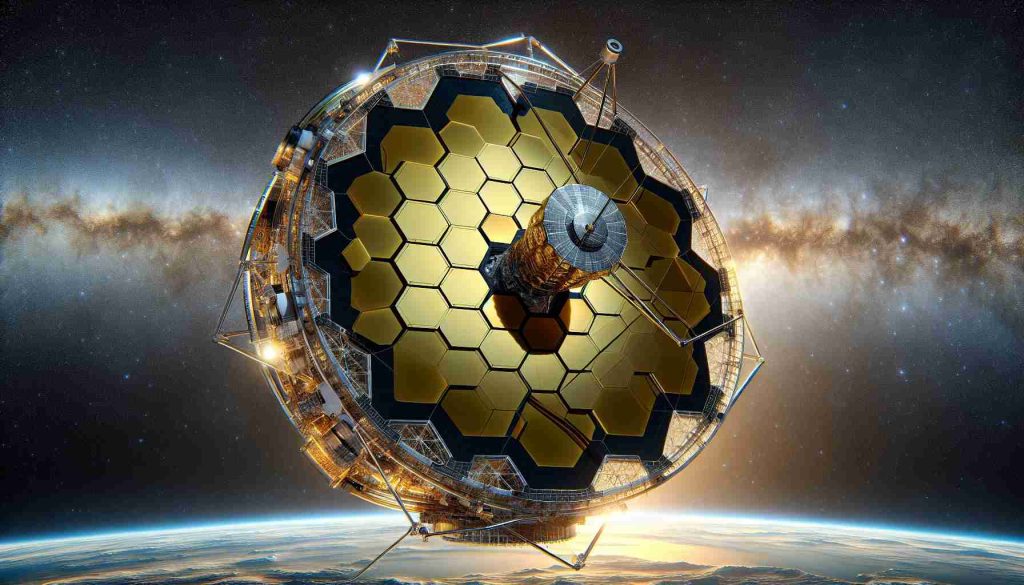
The technology onboard the JWST includes a 6.5-meter primary mirror composed of 18 hexagonal segments made from gold-coated beryllium, providing a much larger collecting area than Hubble’s 2.4-meter mirror. The JWST also boasts a suite of highly sensitive instruments capable of capturing extremely faint signals from the edge of the observable universe. Notably, the telescope’s location at the second Lagrange point (L2), approximately 1.5 million kilometers from Earth, ensures a stable environment and a clear view of the cosmos with minimal interference.
Infrared astronomy is a branch of astrophysics that explores the universe through the observation of infrared radiation, a region of the electromagnetic spectrum beyond visible light. Unlike optical telescopes, infrared telescopes, such as the James Webb Space Telescope (JWST), detect heat emitted by celestial objects. This enables scientists to study phenomena not easily observable in visible light, such as cool or obscured regions of space, the birth of stars within dusty molecular clouds, and the atmospheres of distant planets. Infrared observations also unveil the secrets of distant galaxies, allowing researchers to peer into cosmic history and witness the formation of stars and galaxies in the early universe. The JWST's focus on infrared wavelengths promises to revolutionize our understanding of the cosmos, providing new insights into the most enigmatic corners of space.
The James Webb Space Telescope (JWST) has been a colossal undertaking, both in terms of budget and timeline. With a total cost exceeding $10 billion, it represents one of the most expensive and complex space missions to date. Initially proposed in the early 2000s, the JWST faced numerous delays and challenges, pushing its launch date from the initially planned timeline. Despite these hurdles, the telescope's innovative technology and ambitious scientific goals have garnered significant anticipation and support from the international astronomical community.
Astronomers explores the unknown in air and space, innovates for the benefit of humanity, and inspires the world through discovery.
Follow "Cosmic Wonders Hub"